

7-Day Enchanting Morocco: Casablanca to Marrakech
Overview
Seven days is Morocco’s classic timeframe — long enough to settle into each city’s rhythm, short enough to keep every morning feeling like a new adventure. Starting in Casablanca and ending in Marrakech, this private tour traces a sweeping arc through Morocco’s soul: the royal capital of Rabat, the imperial giants of Meknès and Fez, the volcanic cedar forests of the Middle Atlas, the golden Saharan dunes of Merzouga, the kasbah road of the deep south, and Marrakech’s endlessly theatrical medina.
Tour Highlights
- Casablanca’s Hassan II Mosque — built over the Atlantic Ocean
- Rabat: Hassan Tower, Mohammed V Mausoleum, Kasbah des Oudayas
- Meknès: Bab Mansour gate, Moulay Ismail Mausoleum, Sahrij Souani granaries
- Volubilis Roman ruins with intact mosaic floors and triumphal arch
- Fez el-Bali: full guided medina exploration
- Middle Atlas: Ifrane and Barbary macaques of Azrou
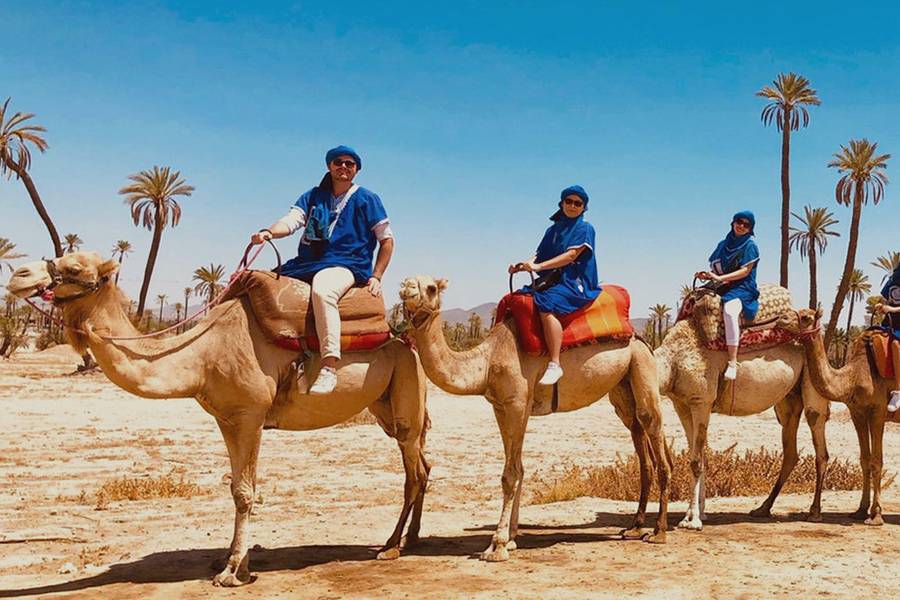
- Erg Chebbi: camel trek, sandboarding, luxury desert camp overnight
- Todgha Gorge, Dadès Valley, Rose Valley
- Aït Ben Haddou UNESCO Kasbah and Ouarzazate
- Marrakech: Jemaa el-Fna, Koutoubia, Bahia Palace, Majorelle Garden
What’s Included
- Private air-conditioned vehicle (fuel included)
- Casablanca airport/hotel pickup; Marrakech airport/hotel drop-off
- Licensed local guides in Fez and Marrakech
- Licensed heritage guide at Aït Ben Haddou
- 5 nights in hotels/riads (breakfast daily)
- 1 night luxury desert camp (dinner & breakfast)
- Camel ride and sandboarding at Erg Chebbi
- Complimentary bottled water and fuel
- All taxes
Not Included
- Flights tickets
- Entrance fees to
- Monuments of any
- Lunches and drinks
- Anything not mentioned in the itinerary
Day 1 — Casablanca › Rabat
Your driver meets you at Casablanca airport or hotel. The first stop is the magnificent Hassan II Mosque on the Corniche — the largest mosque in Africa and third-largest in the world, built on a promontory over the Atlantic Ocean. Its soaring 210-metre minaret, the world’s tallest, is flanked by laser beams pointed toward Mecca visible for miles at night. The mosque’s vast marble plaza, retractable roof, and underfloor heating over the ocean are engineering marvels; guided interior tours reveal extraordinary zellij tilework, carved cedarwood ceilings, and enormous hand-wrought brass chandeliers.
Continue 90 kilometres north to Rabat, Morocco’s elegant modern capital. Visit the Hassan Tower — a 12th-century red-sandstone minaret that was intended to be the world’s tallest mosque minaret but was never completed, standing at 44 metres of its planned 86. Beside it stands the Mausoleum of Mohammed V, a pristine white marble structure of extraordinary craftsmanship housing the tombs of King Mohammed V and his sons King Hassan II and Prince Moulay Abdallah. Explore the Kasbah of the Udayas, a 12th-century Almohad citadel perched above the Bou Regreg river, with its blue-and-white Andalusian streets, a small Moorish garden, and sweeping Atlantic views. Overnight in Rabat.
Day 2 — Rabat › Meknès › Volubilis › Fez
After breakfast, drive to Meknès — the least-visited of Morocco’s four imperial cities and arguably the most impressive in scale. Sultan Moulay Ismail (r. 1672–1727) spent his entire reign building a capital to rival Versailles, enclosing 25 kilometres of walls and constructing over 50 palaces. The Bab Mansour gate is the centrepiece: an overwhelming double-arched monument covered in intricate green-and-white zellij tilework, carved stucco, and geometric cedar frieze work. Inside the imperial quarter, visit the Mausoleum of Moulay Ismail — one of the few non-Muslim-accessible sacred sites in Morocco — and the vast Heri es-Souani granaries, whose thick earthen walls kept grain cool enough to last decades. The adjoining Sahrij Souani Basin once supplied water to the entire imperial complex via an ingenious underground aqueduct system.
Continue to the ancient Roman site of Volubilis — Morocco’s most significant archaeological site, inhabited from the 3rd century BC through the 11th century AD. The UNESCO-listed ruins include a triumphal arch dedicated to Emperor Caracalla, the foundations of the Capitol and Basilica, and extraordinary in-situ mosaic floors depicting Orpheus, Bacchus, and the Labours of Hercules in vivid colour. Arrive in Fez by evening. Overnight in a traditional riad in the medina.
Day 3 — Fez El-Bali Guided Medina Exploration
A full day in Fez el-Bali — the world’s largest car-free urban area and most completely preserved medieval city. Your licensed local guide navigates the labyrinth of over 9,000 lanes, beginning at the Chouara Tanneries: viewing balconies above the ancient stone vats reveal workers treading hides through pigeon-dung softening baths and mineral dye pools of poppy red, indigo, saffron, and emerald green — a method unchanged since the 10th century.
Continue to the Bou Inania Madrasa (14th century), whose courtyard is one of the finest examples of Marinid architecture in Morocco: floor-to-ceiling zellij tilework, carved stucco panels, and a green-tiled pyramid roof reflected in a central marble pool. Walk the spice-fragrant lanes of the Attarine Souk — named for the perfume and attar traders who have occupied these stalls for centuries. Visit the exterior of the al-Qarawiyyin Mosque, founded in 859 CE and widely considered the world’s oldest continuously operating university. Explore the Jewish Mellah with its distinctive tall-windowed houses, working synagogue, and silver jewellers’ quarter. Afternoon free for independent exploration or shopping. Overnight in Fez riad.
Day 4 — Fez › Ifrane › Azrou › Midelt › Ziz Valley › Merzouga
Depart Fez southward into the Middle Atlas. The first stop is Ifrane — a planned resort town at 1,650 metres built by the French in the 1930s with chalet-style architecture, trimmed parks, and a famous stone lion sculpture. In winter it becomes a ski resort; in summer it offers cool mountain air and flower-filled meadows. Continue to Azrou and its ancient cedar forest, where a resident troop of Barbary macaques — the only wild primate north of the Sahara — descend from the trees to investigate passing visitors. Cross the Zad Pass (2,178 m) and descend into the semi-arid Tafilalet basin, stopping for lunch in Midelt, the “apple capital” known also for its mineral markets displaying fossils, geodes, and amethyst clusters. The dramatic afternoon drive follows the Ziz Valley — a corridor of tens of thousands of date palms fed by the Ziz River — through Errachidia to Erfoud. Arrive in Merzouga as the dune horizon glows in the fading light. Overnight at a desert lodge.
Day 5 — Erg Chebbi › Camel Trek › Desert Camp Overnight
A full day devoted to the Sahara. After breakfast, your 4×4 heads into the dune sea for a morning circuit. Visit the remote village of Khamlia — a settlement of descendants of West African traders whose Gnawa musical tradition is preserved through generations of master musicians. A performance in a shaded courtyard, with the guembri bass lute and metal krakeb castanets creating a hypnotic, spiritual soundscape, is one of the most memorable cultural experiences Morocco offers. Continue through the open desert to visit a family of Saharan nomads who maintain a traditional seasonal lifestyle — raising camels, weaving textiles, and navigating by the stars — without electricity or plumbing. Try your hand at sandboarding on the tallest accessible dune faces. Late afternoon, your camel handler leads a caravan into the heart of Erg Chebbi for a sunset of spectacular colour. Your Berber camp awaits: a candlelit dinner of slow-cooked lamb tagine and couscous, traditional drumming around a fire of palm fronds, and a dark-sky experience that makes the Milky Way feel close enough to touch. Overnight in a private tent.
Day 6 — Desert Sunrise › Todgha Gorge › Dadès Valley › Aït Ben Haddou › Ouarzazate
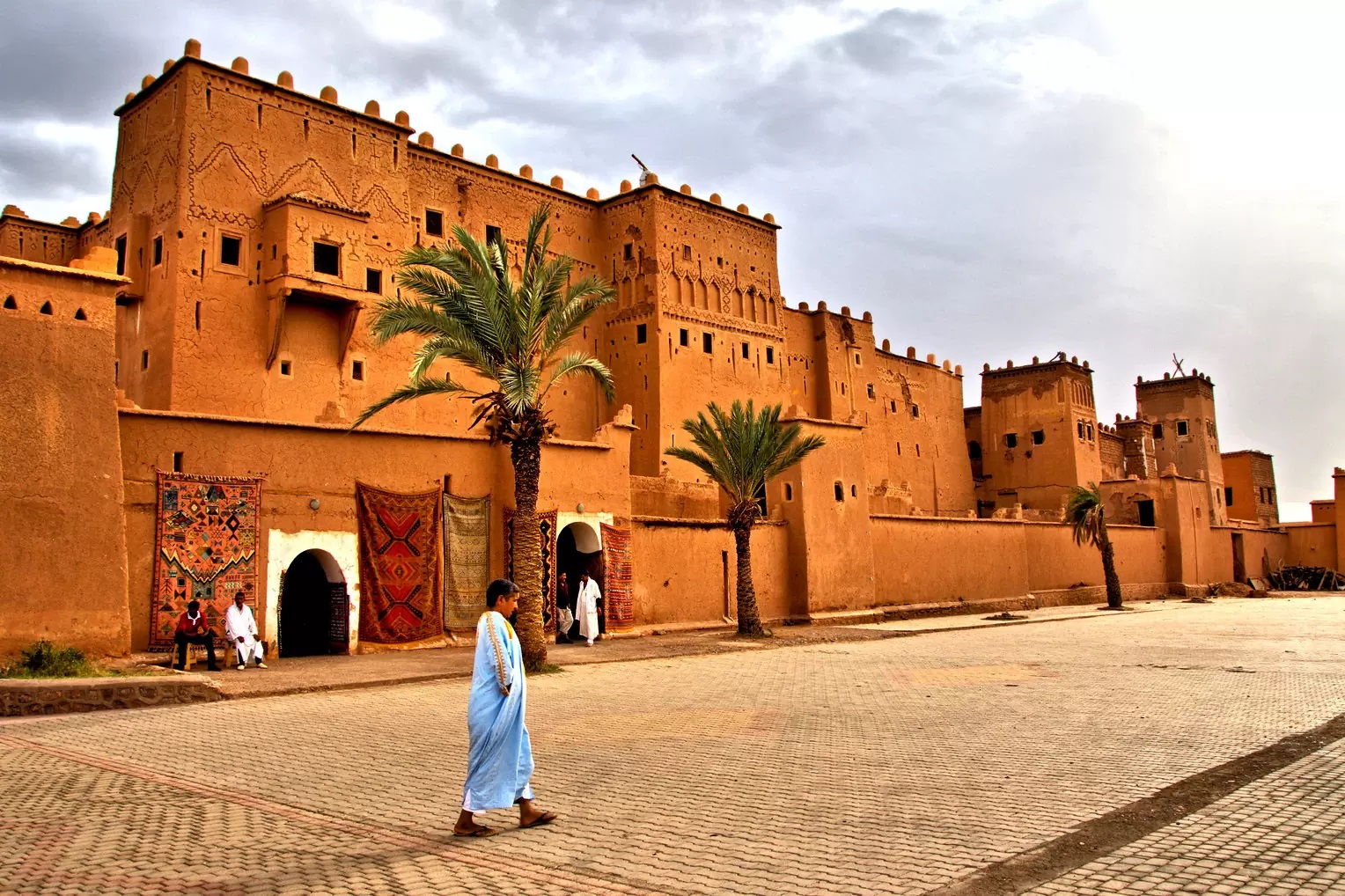
Pre-dawn wake-up for the Saharan sunrise — climb the nearest dune and watch the light transform the desert from charcoal to rose to blazing gold. Breakfast and hot showers at the lodge, then depart west. The morning brings the spectacular walk through Todgha Gorge, where 300-metre sheer limestone cliffs narrow to a 10-metre-wide passage above the cold Todgha River. Vendors sell fresh orange juice and argan biscuits from small cafés wedged into the rock face. Continuing west through Boumalne Dadès and the Valley of Roses — fragrant with Damascene roses each spring — and the palm grove of Skoura, you reach Ouarzazate in the afternoon. A visit to the imposing Kasbah Taourirt reveals the extraordinary scale of the Glaoui pasha’s 20th-century residence. Final stop: the iconic Ksar of Aït Ben Haddou at sunset, when the earthen towers glow deep amber in the last light. Overnight in Ouarzazate.
Day 7 — Tizi n’Tichka › Marrakech City Tour
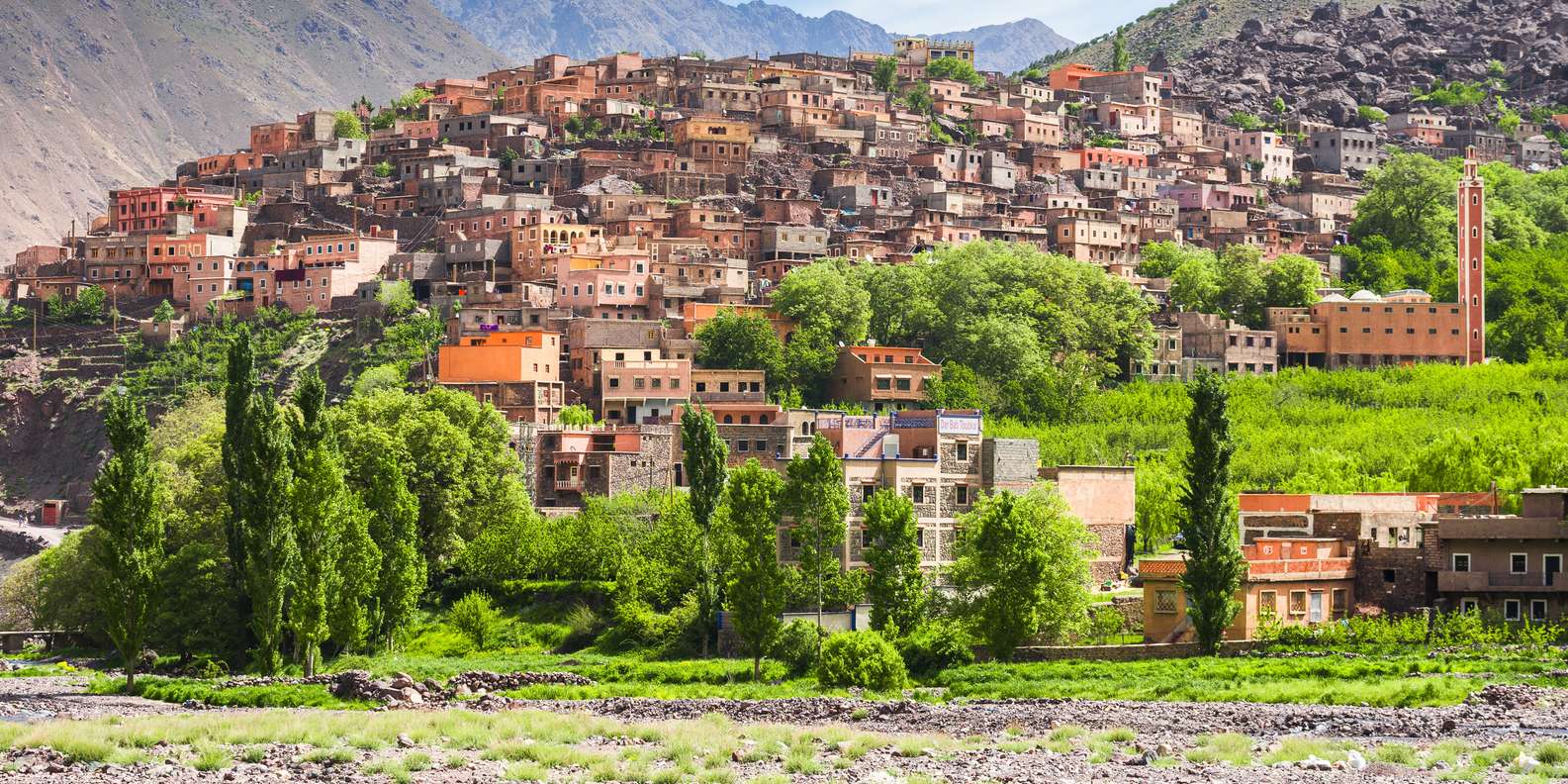
After breakfast, the dramatic Tizi n’Tichka pass crossing (2,260 m) delivers you from the arid south to the lush Haouz plain of Marrakech. En route, a stop at a roadside Berber village with its geometric Amazigh murals and traditional silver jewellery market. Arriving in Marrakech by noon, your local guide leads a focused highlights tour: the Bahia Palace (19th-century grand vizier’s residence with 160 elaborately decorated rooms), the coloured-tile courtyard of the Saadian Tombs, and a wander through the themed souk quarters — copper lanterns, hand-knotted rugs, coloured babouche slippers, and aromatic spice pyramids. An hour of free time in the Jemaa el-Fna square. Drop-off at your Marrakech hotel or Menara Airport.
Book now
Feel free to contact us
- +2126 70 26 06 18
- contact@morocconomadtravels.com
- Marrakech Morocco
Circuits
Excursions